



925 Sterling Silver vs Silver Plated: What's the Real Difference?
Sterling silver is solid 92.5% silver all the way through. Silver plated jewellery is a base metal — usually brass or copper — with a silver coating just 0.5 to 5 microns thick (a human hair is about 70 microns). The plating wears off within months of regular wear, exposing the base metal beneath. Sterling silver lasts decades, can be repaired and polished indefinitely, and holds real precious metal value. The hallmark tells you which is which: 925 means sterling; EP or EPNS means plated.
You are shopping for a silver necklace. One is priced at $15. Another is $80. They look almost identical in the photos. Both shine. Both say "silver." So what exactly is the difference — and does it actually matter? The answer almost always comes down to one distinction: whether the piece is 925 sterling silver or silver plated. Understanding it could save you from real disappointment, wasted money, and jewellery that fades, peels, or leaves a green mark on your skin within weeks.
What Is 925 Sterling Silver?
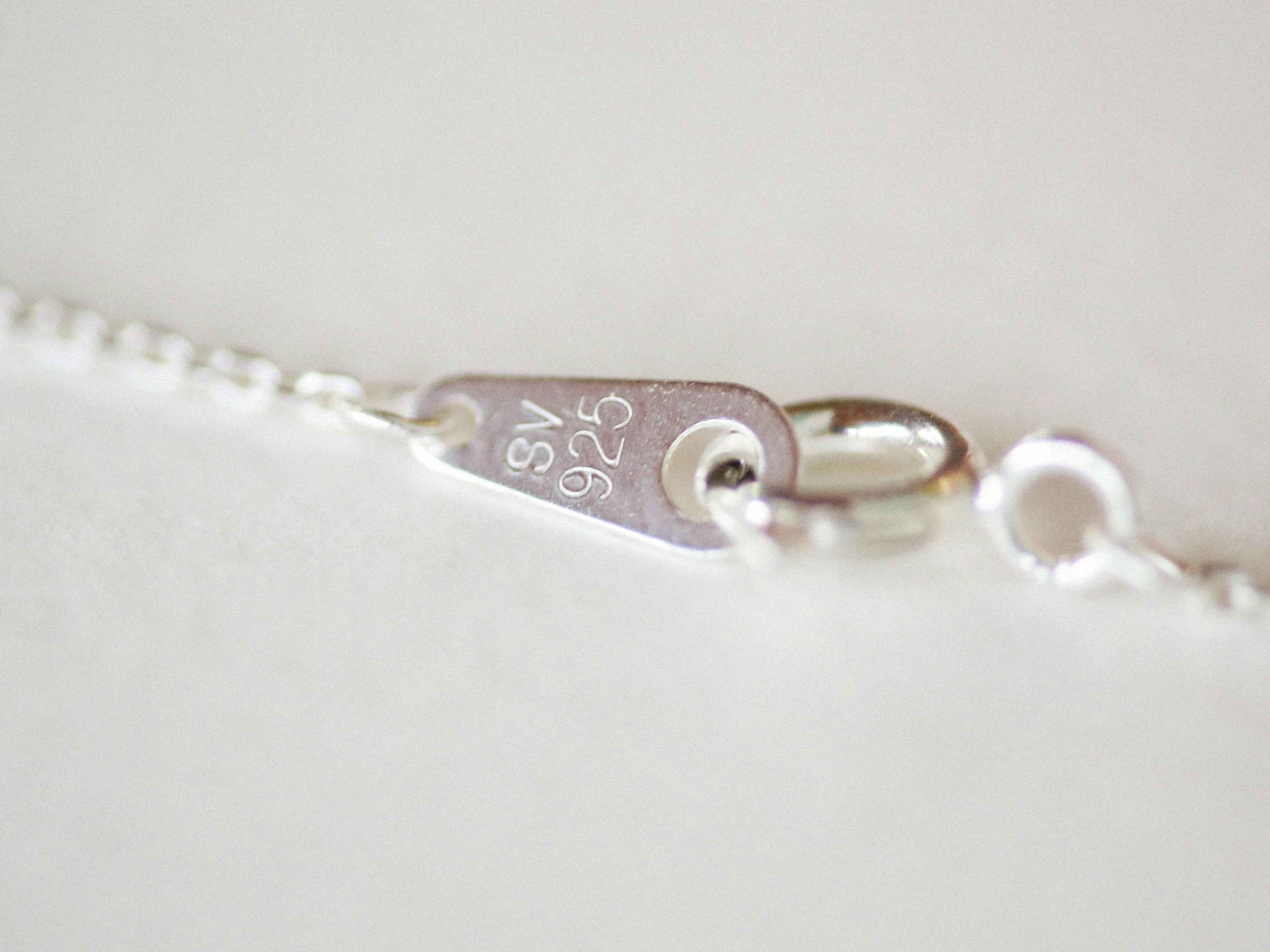
925 sterling silver is a precious metal alloy made of 92.5% pure silver and 7.5% other metals — typically copper, added for strength. The 925 hallmark stamped on a piece is an internationally recognised guarantee of exactly this composition, with the same standing in the jewellery trade as a caratage mark on gold.
The crucial detail: sterling silver is solid metal all the way through. From the surface to the core, every part of the piece is the same 92.5% silver alloy. There is no coating, no layer, no "through" to wear. This single fact explains nearly everything that follows — the durability, the repairability, the value, and the lifetime of wear.
Pure silver on its own — marked 999 or "fine silver" — is too soft for everyday jewellery, bending and scratching under minimal pressure. The 7.5% copper addition creates a metal hard enough to hold gemstone settings, durable enough for daily wear, and still genuinely, unmistakably silver. That is sterling. (For the full story of the hallmark, see our guide to what 925 means on silver jewellery.)
925 sterling silver is not a silver-coloured metal. It is not a coating. It is solid precious metal, the same all the way through — hallmarked, internationally recognised, and built to last.
— AG925 StudioWhat Is Silver Plated Jewellery?
Silver plated jewellery is made from a base metal — usually brass, copper, zinc, or nickel — with an extremely thin layer of silver applied to the outside through electroplating. An electric current deposits silver ions onto the surface of the base metal, bonding a microscopic silver film to the exterior.
How thin is that film? The silver coating on plated jewellery is typically just 0.5 to 5 microns thick. For perspective: a single human hair is approximately 70 microns wide. Even the thickest commercial plating is over ten times thinner than a hair.
This is precisely why plated jewellery can look identical to sterling silver in product photos and display cases — and behave completely differently the moment you start wearing it. The silver is real, but only as a cosmetic finish over a core of negligible value. Friction, sweat, lotion, and ordinary daily contact wear through it steadily, and once it is gone, it is gone.
Side by Side — Every Difference That Matters
Here is how the two compare across every factor that genuinely affects a buying decision:
| Feature | 925 Sterling Silver | Silver Plated |
|---|---|---|
| Silver content | 92.5% solid silver throughout | Trace amount — surface coating of 0.5–5 microns |
| Hallmark | 925, S925, Sterling, Ster | EP, EPNS, or no marking at all |
| Durability | Lasts decades with basic care | Plating wears through in months of regular wear |
| Tarnishing | Tarnishes slowly — polishes back to full brightness | Tarnishes quickly — cleaning risks stripping the plating |
| Skin safety | Hypoallergenic for most people | Base metal contact causes green marks and reactions as plating wears |
| Repair and resizing | Yes — by any jeweller, indefinitely | No — repair work exposes the base metal |
| Resale and intrinsic value | Real precious metal value, tied to the silver market | Effectively zero |
| Best suited for | Daily wear, meaningful gifts, heirloom pieces | Single-occasion costume and fashion pieces |
The Real Problems with Silver Plated Jewellery
Silver plating wears off. It is not a question of if — only of when. And when it does, the consequences go beyond cosmetic disappointment.
Ordinary daily activities — washing hands, applying lotion, sweating, friction against clothing — wear the microscopic plating away steadily. Within weeks to months of regular wear, the base metal shows through in dull, patchy discolouration, starting at the highest-contact points.
Once the plating is gone, skin touches the base metal directly — usually brass, copper, or nickel. Copper produces the familiar green stain. Nickel is one of the most common contact allergens, causing rashes and irritation for a significant share of wearers.
The trace of silver on the surface is monetarily negligible. Silver plated jewellery has effectively no resale or intrinsic value — unlike sterling silver, which is a traded precious metal whose worth is published daily on commodity markets.
When sterling silver is scratched, a jeweller polishes and refinishes it — the silver runs all the way through. With plated pieces, any polishing, soldering, or resizing strips the surface and exposes the base metal, making proper restoration impossible.
The True Cost — Worked Out Over Time
Run the numbers over even three years: a plated necklace replaced twice a year costs more than the sterling piece — and at the end you own nothing of value. Over any meaningful period of time, sterling silver is not the expensive option. It is the cheaper one.
How to Tell the Difference Before You Buy
Whether shopping in-store, browsing online, or assessing an inherited piece — here are the most reliable ways to know exactly what you are looking at, in order of usefulness.
Check the Hallmark — The Most Reliable Method
Genuine sterling silver is always stamped. Look on the inside of ring bands, near the clasp of necklaces and bracelets, or on the back of earring posts. On small pieces, use a magnifying glass — if the piece is sterling, the stamp will be there. Critically, plated pieces carry their own telltale marks:
Four More Ways to Check
Question the price. Sterling silver has real material cost. If a "silver" necklace is priced at the cost of a coffee, it is not sterling — the metal alone would cost more. Genuine silver can be affordable, but never suspiciously cheap.
The magnet test. Silver is not magnetic. If a strong magnet attracts the piece, it contains iron or steel and is definitely not sterling. One caveat: brass and copper are also non-magnetic, so a piece passing the magnet test is not automatically genuine — use this check alongside the others, never alone.
Inspect the edges and joins. On plated pieces, the coating wears first at high-contact points — ring shanks, bracelet clasps, the links nearest a necklace clasp. Any darker or yellower base colour showing through at these points means the piece is plated.
Ask the seller directly. A reputable brand will state plainly whether a piece is solid sterling or plated, and will tell you where to find the hallmark. Vague answers, deflection, or missing hallmark information are red flags worth acting on.
Which Should You Choose?
The honest answer depends on what you are buying the jewellery for. There are legitimate uses for plated pieces — but they are narrower than most sellers admit. Here is the clear-eyed guide:
- You need it for a single event — a costume, a performance, one outfit
- You are trialling a bold style before committing to sterling
- You fully understand it is temporary and priced accordingly
- It will not be worn against skin for long periods
- You plan to wear it daily or regularly
- You have sensitive skin or any metal allergy
- You are giving it as a meaningful gift
- You want something that holds genuine value
- You want a piece to keep for years — or pass down
What About Silver Filled?
Shopping for silver, you may also encounter the term silver filled. This sits between plated and sterling: a substantially thicker layer of silver — typically 5–10% of the piece's total weight — is mechanically bonded to a base metal core under heat and pressure, rather than electroplated. The result is considerably more durable than standard plating.
But silver filled is still not solid silver. It does not qualify for the 925 hallmark, cannot be repaired or resized the way sterling can (the bond is broken by soldering heat), and does not retain the value of genuine sterling silver. It is a reasonable middle option for some fashion jewellery — but it is not a substitute for the real thing, and a reputable jeweller will always be transparent about which one you are buying.
Why AG925 Works Exclusively with Certified Sterling Silver
At AG925, the decision to work only with certified 925 sterling silver was made at the very beginning — and held without exception since. It is in our name: Ag is the chemical symbol for silver; 925 is the standard that defines it.
Our semi-precious stones — turquoise, labradorite, amethyst, moonstone, garnet — are set by hand, and they deserve settings that match their quality. Plated metal would not hold the stones securely, would degrade around them, and would undermine everything each piece is meant to be.
Every piece we make is hallmarked 925. Every piece can be professionally cleaned, polished, and repaired for as long as you own it. Every piece is designed to be worn for years — not months — and to mean something to the person wearing it.
Every AG925 piece is hallmarked 925, hand-set with genuine semi-precious stones, and made to last a lifetime.
Shop the Full CollectionFrequently Asked Questions
Silver plated jewellery contains only a trace of real silver — a coating typically 0.5 to 5 microns thick over a base metal such as brass or copper. It is not solid silver, carries no 925 hallmark, and has no precious metal value. For practical purposes, it is not real silver in any meaningful sense. The silver is purely a cosmetic surface finish.
With daily wear, most silver plated pieces begin showing visible wear within 3 to 6 months. The plating fades first at high-friction points — clasps, ring shanks, and chain links nearest the clasp. Worn only occasionally, a plated piece may hold its appearance for a year or two. By comparison, solid 925 sterling silver lasts decades with basic care, and can be polished back to new condition indefinitely.
Technically yes — some jewellers offer re-plating services. In practice it is rarely worthwhile: the piece must be stripped and cleaned first, the cost often approaches the price of a new piece, and the quality of the underlying base metal dictates how well the fresh plating adheres and how long it lasts. With sterling silver, the question never arises — there is no plating to renew.
Once the silver coating wears away, your skin contacts the base metal directly — usually copper or brass. Copper reacts with the natural acids and moisture on skin to produce copper chloride, a green compound. It is harmless and washes off, but it is a definitive sign the plating has worn through. Solid sterling silver contains only 7.5% copper bound within the alloy, which is why this reaction is rare with genuine 925 pieces.
The same logic applies to gold-plated as to silver-plated jewellery: plating is a thin coating over base metal, and all plating eventually wears through. Solid 925 sterling silver is precious metal throughout — it never reveals a different material underneath, can be repaired indefinitely, and holds intrinsic value. For longevity and value, solid sterling outperforms any plated option, gold or silver.
Check the hallmark first: 925, S925, Sterling, or Ster confirm solid sterling silver. EP or EPNS marks indicate electroplating, and the absence of any mark on a piece sold as silver is itself a strong signal of plating. Supporting checks: an unusually low price, colour differences visible at clasps and edges, and how the piece has tarnished — sterling tarnishes evenly and polishes clean, while worn plating shows patchy base metal that no polishing restores.
Both tarnish — exposed silver reacts with sulphur compounds in the air regardless of what is beneath it. The difference is what happens next. Tarnish on sterling silver sits on the surface and polishes away completely, restoring full brightness; the process can be repeated for the life of the piece. On plated jewellery, cleaning is risky — polishing thins the already-microscopic coating, and once it wears through, the discolouration you see is the base metal itself, which no amount of polishing will fix. Our complete sterling silver cleaning guide covers the safe methods.

Leave a comment
This site is protected by hCaptcha and the hCaptcha Privacy Policy and Terms of Service apply.